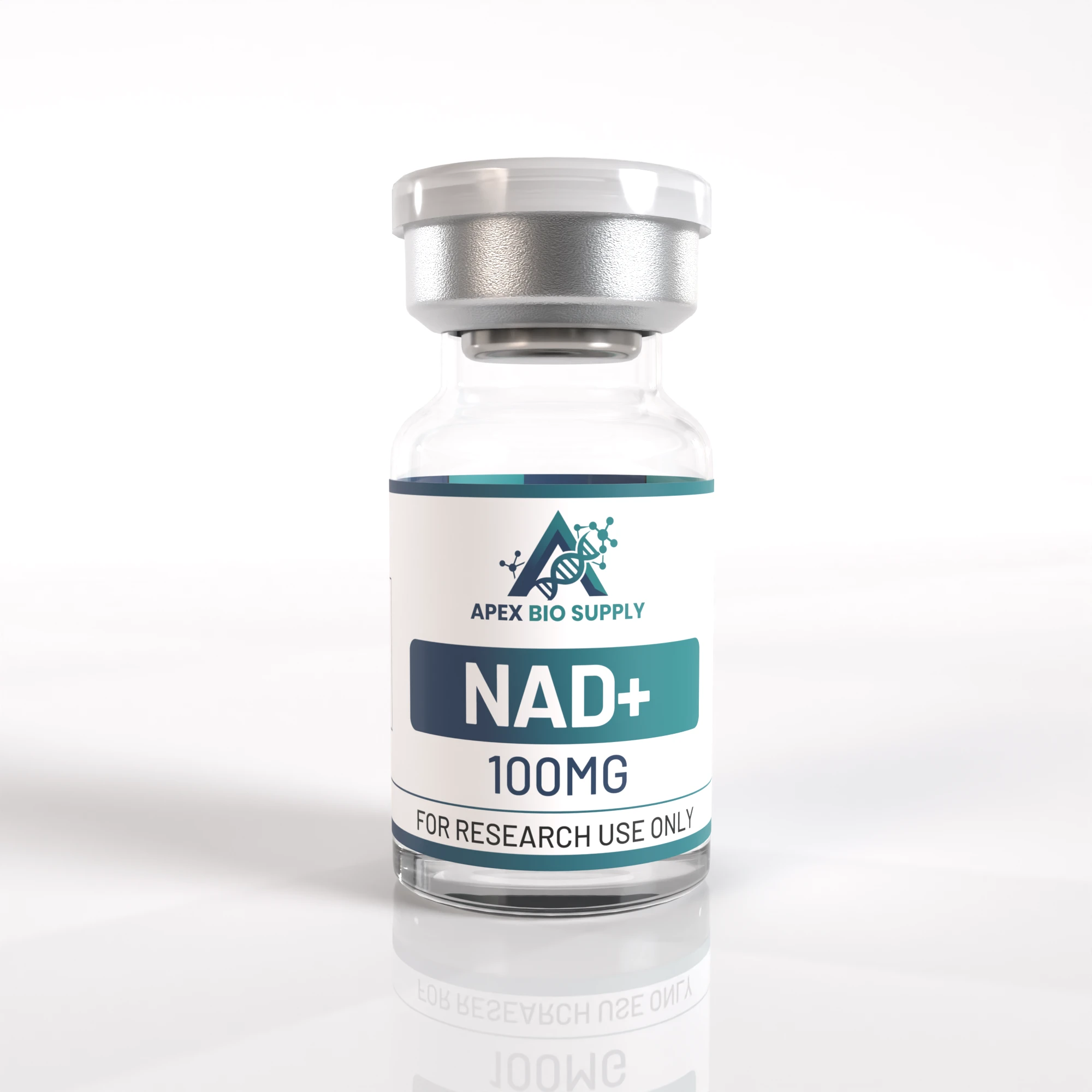

NAD+
NAD+ (Nicotinamide Adenine Dinucleotide) is a naturally occurring redox molecule essential to a wide range of biochemical reactions in cellular metabolism. This product is provided for academic, industrial, and laboratory research purposes and is not intended for human or animal consumption.
NAD+ plays a central role in redox homeostasis, energy metabolism, and cellular signaling, making it a critical component in various biochemical pathways. Its importance spans from mitochondrial function to DNA repair and aging research. This product is formulated for experimental use to investigate the biochemical properties of NAD+ and related biochemical processes.
Research Overview
NAD+ is a crucial coenzyme involved in numerous metabolic processes, including glycolysis, the tricarboxylic acid (TCA) cycle, and the electron transport chain. It exists in two primary redox states: oxidized (NAD+) and reduced (NADH). The dynamic equilibrium between these forms is vital for energy transfer and cellular redox balance. Research has explored NAD+ as a key regulator of lifespan extension, mitochondrial function, and stress response in various model organisms and cellular systems.
Key Research Focus Areas
- Metabolic Regulation: NAD+ is essential for adenosine diphosphate (ADP) to adenosine triphosphate (ATP) conversion and serves as a substrate for enzymes such as sirtuins (SIRT1-7), which mediate longevity and stress responses.
- Mitochondrial Function: NAD+ supports the activity of mitochondrial enzymes, including complex I of the electron transport chain, and influences mitochondrial biogenesis and homeostasis.
- DNA Repair and Longevity: NAD+ is a cofactor for poly(ADP-ribose) polymerase (PARP), which plays a critical role in DNA repair. Research has linked NAD+ levels to aging processes and lifespan extension in model organisms.
- Epigenetic Modulation: NAD+-dependent enzymes, such as SIRT1, modulate chromatin structure and gene expression, influencing cellular differentiation and stress responses.
- Neurodegeneration: NAD+ depletion is implicated in neurodegenerative diseases, including Alzheimer’s and Parkinson’s, due to its role in mitochondrial dysfunction and DNA damage repair.
This product is intended for researchers studying NAD+ biochemistry, metabolism, and its implications in disease modeling and therapeutic development. Use is restricted to authorized academic, industrial, or laboratory settings only.
Safety Note: While NAD+ is a naturally occurring molecule, experimental manipulation of its levels or pathways may present risks. Proper safety protocols and laboratory controls should be adhered to. Research should be conducted in accordance with institutional guidelines and regulatory standards.
For research use only. Not for human or animal consumption.
| Size | 100MG, 500MG |
|---|