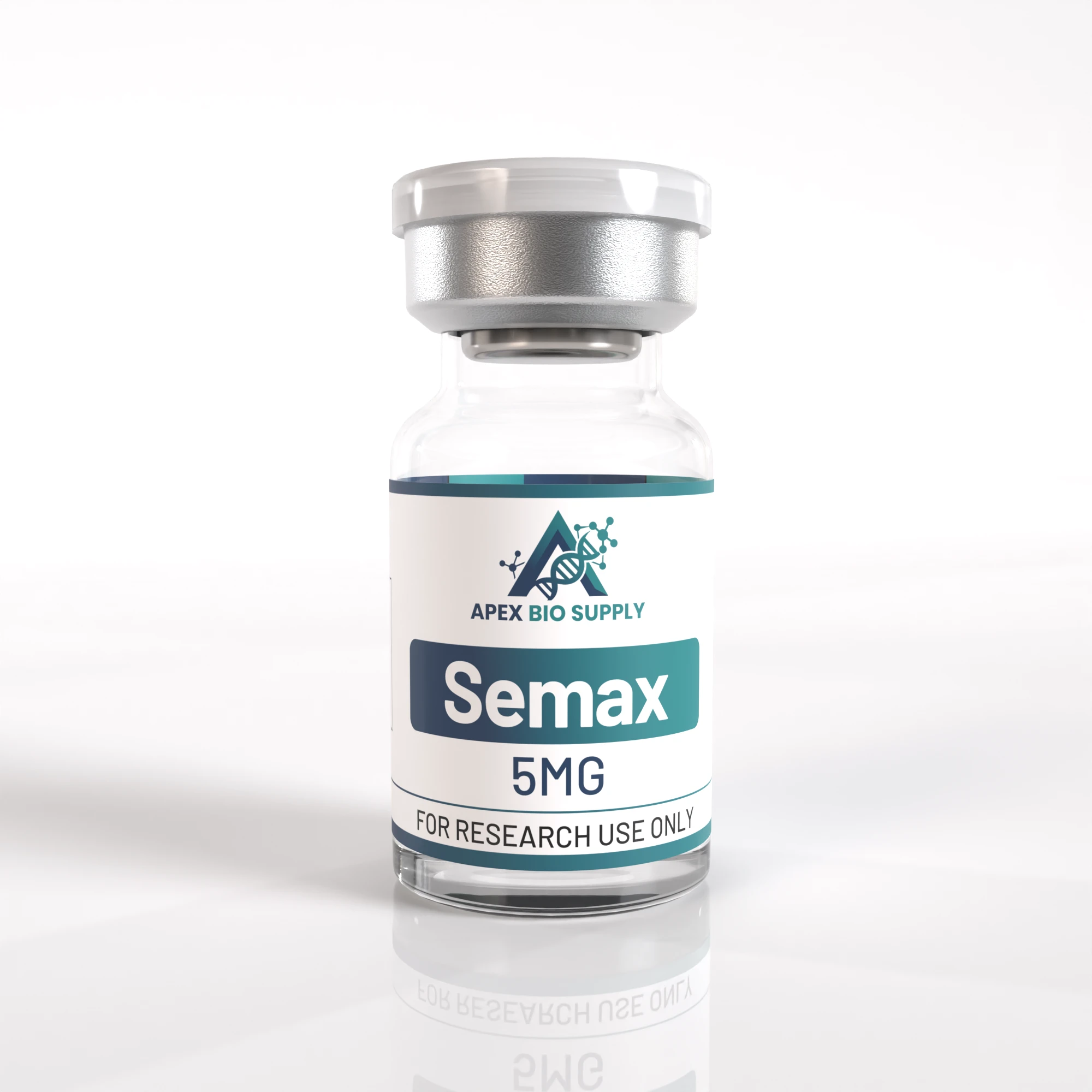

Semax
Semax is a synthetic peptide derived from the structure of the naturally occurring compound Cynarin, which was initially studied for its potential neuroprotective and cognitive enhancement properties. Semax is classified as a cognitive enhancer peptide and has been extensively researched in preclinical and early clinical studies within a research context.
Semax is designed to act on the brain-derived neurotrophic factor (BDNF) pathway, which plays a crucial role in synaptic plasticity, neuronal survival, and cognitive function. Its primary mechanism of action involves modulation of intracellular signaling pathways, including the phosphoinositide 3-kinase (PI3K)/AKT pathway, which has been implicated in neuroprotection, memory formation, and learning.
Research Context
Research on Semax has primarily focused on its potential effects on cognitive function, neuroprotection, and recovery mechanisms in experimental animal models. Early studies in rodents have demonstrated its ability to enhance learning and memory, improve spatial navigation, and mitigate neuroinflammation associated with neurodegenerative conditions.
Research Overview
Semax has been explored in various preclinical settings, including models of aging, traumatic brain injury (TBI), and neurodegenerative diseases such as Alzheimer’s disease. In these studies, Semax has been administered via subcutaneous injection, intraperitoneal injection, or intracerebroventricular delivery. Results have indicated promising findings regarding its role in promoting neurogenesis, enhancing synaptic plasticity, and reducing oxidative stress.
Key Research Focus Areas
- Cognitive Enhancement: Preliminary research suggests Semax may improve cognitive performance, including attention, memory, and learning abilities, through modulation of BDNF and associated pathways.
- Neuroprotection: Investigations have explored Semax’s potential to mitigate neuronal damage in models of traumatic brain injury, stroke, and neurodegenerative diseases.
- Synaptic Plasticity: Studies have examined its role in enhancing synaptic plasticity, which is essential for learning and memory formation.
- Antioxidant and Anti-Inflammatory Effects: Research indicates Semax may reduce oxidative stress and inflammation, contributing to neuroprotective mechanisms.
- Recovery Mechanisms: Early findings suggest Semax could support recovery from acute brain injuries and chronic neurodegenerative conditions by promoting neuronal repair and regeneration.
It is important to note that Semax is a peptide designed for use in research environments only. Further clinical investigation is required to fully understand its potential applications and safety profile in humans.
For research use only. Not for human or animal consumption.
| Size | 5MG, 10MG |
|---|